





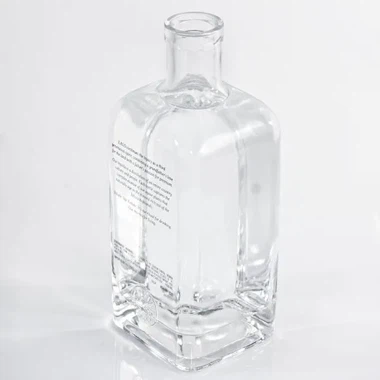
What is Tequila Bottle
A portable container for holding liquids, characteristically having a neck and mouth and made of glass or plastic. the contents of such a container; as much as such a container contains: a bottle of wine.
Benefits of Tequila Bottle
Preservation of Wine Quality:Tequila bottles are a popular choice because they are odorless and tasteless, ensuring that they do not affect the taste or quality of the wine they contain. They effectively protect wine from exposure to oxygen, light, and external contaminants, thereby extending its shelf life.
Reusable and Recyclable:Tequila bottles are reusable, provided they are thoroughly cleaned, making them an environmentally friendly option. Additionally, glass is a highly recyclable material, reducing resource waste and contributing to sustainability efforts.
Transparency and Showcase:Glass bottles offer exceptional transparency, allowing consumers to appreciate the wine's color and clarity. This transparency is crucial for showcasing wine and promoting brands, as the appearance is a key factor in attracting consumers.
Versatility and Customization:Tequila bottles come in various shapes, colors, and designs, allowing for flexible customization to align with different brands and wine products. This versatility helps meet market demands and establish brand identity.
Temperature Maintenance:Glass possesses excellent insulating properties, aiding in maintaining the wine's temperature stability. This feature is particularly important for wines that need to be served at specific temperature conditions, such as red wines and champagne.
Quality Perception and Tradition:Tequila bottles have a long-standing tradition in the liquor industry and are associated with high quality and craftsmanship. They convey a sense of tradition and heritage that can enhance a wine's perceived value.




Why Choose us
Our Products
The professional production of high-end handmade crystal glass white material, high white material mechanism of glass bottles, glass cover, lighting lamps, perfume bottles, pots, cups and all kinds of high-end glass manufacturers,
Our Company
Corporation registered capital of 58 million yuan, covers an area of more than 90 thousand square meters, has a subsidiary of 4. Is a research and development, design, production, sculpture, painting, baking and export as one of the integrated large-scale production enterprises.
Company Certificate
Our plants certified with ISO 9001: 2015, so do approved tests by SGS.
Customer Service
The design team will continue to understand your brand story, make a sketch that fits your idea, consider your cost, and improve the program to make the project progress smoothly.
Manufacturing Of Tequila Bottle: 3 Stages
Collection of Raw Material
Natural raw materials are used for manufacturing of tequila bottle and glass jars for packaging. These raw materials are Silica and Soda lime. These materials perform different functions like, soda is used for lowering the melting point of sand and lime helps in making the glass hard, shiny and durable. Cullet is broken glass which is obtained from the bottles rejected by manufacturers of tequila bottle, from the recycling points, bottle banks or kerbside collection system. It is very beneficial in manufacturing of glass containers.
Preparation of Batch
The batch is prepared on a grinding machine. Raw material, cullet (shredded glass pieces) and decolourisers / colourisers are ground finely in a grinder. The next step is to properly weigh these ingredients in the correct proportions before mixing them together. The mixing of these ingredients is usually done in a mixer until a homogeneous mixture known as a batch or frit is obtained. Before being fed to the kiln, the batches are stored in large vertical silos. The batch is now taken for further process of melting in a furnace.
Melting in Furnace
He mixture continues to melt in a furnace heated to a temperature of about 1748 °C. The furnace operates 24 hours a day, 7 days a week and has a service life of approximately 1012 years. The raw material entering the furnace turns into glass containers in about a day. Molten glass is delivered to the forming machine through a series of distribution channels called forehearths. At the end of the forehearths, the flow of glass is cut into pieces that are tightly controlled by weight, shape and temperature.
Forming at Present
Manufacturing of tequila bottle is done by two methods: B&B (Blow and Blow) process and NNPB (Narrow Neck Press and Blow) process. Both processes involve cutting a stream of molten glass with a cutting blade at a temperature of about 1,050–1,200 °C to form a rigid glass cylinder commonly referred to as a gob.
Please note that the gob is of predetermined weight, which is sufficient for manufacturing of glass bottle. Both B&B and NNPB processes start with the falling of gob, by gravity, and are guided through chutes, into the blank moulds, Two halves of moulds are clamped shut and then sealed by the baffle from above. However, in the B&B process, the parison is blown while in the latter, pressing forms the glass container parison.
Annealing
To ensure the strength of a newly formed glass vessel, it must be heat treated and subjected to controlled and uniform cooling in a tunnel kiln known as an “annealing lehr” . This can take anywhere from 30 minutes to 2 hours. If the cooling is uneven, the load will weaken the glass. An annealing oven commonly known in the industry as a lehr heats the vessel to about 580°C and then cools it down for 20-60 minutes, depending on the thickness of the glass.
The Lehr is a moving conveyor with different temperature zones. To make tequila bottle and glass jars more scratch-resistant, they are usually treated with a hot applied top coat before entering the lehr and an additional coating as it cools as it leaves the lehr. This completes the glass container manufacturing process.
Coatings
Usually there are two surface coatings done on tequila bottle and glass jars. The first one is done before annealing, at the hot end and the other one happens at the cold end, right after annealing.
A thin layer of tin oxide is applied to the hot end using a safe organic compound or inorganic stannic chloride. The tin-based systems are not the only solution, but they are the most widely used. Besides these, titanium tetrachloride or organo titanate can also be used. However, in all cases the coating makes the glass surface better adhere to the cold end coating. On the cold end, a layer of polyethylene wax is usually applied via an aqueous emulsion.
They are also coated to prevent the containers from sticking together as they move along the conveyor. In other words, the coating gives the glass a virtually scratch-resistant surface. It is basically made of special glass. As a result of reducing surface damage during use, coatings are often described as hardening and less commonly as retaining strength coatings.
Quality Inspection Machines
Glass containers are 100% checked for the presence of various defects, both automatically and manually.
The defects of glass containers can be of various different kinds. The glass can have small cracks called checks, and sometimes foreign objects called stones can penetrate the walls of the glass container.
Other defects include air bubbles (i.e. bubbles in the glass) and unnecessarily thin walls. Another common defect in glass container manufacturing is called a tear. In the press and blow method, if the plunger and the mould are misaligned or if they are not heated to the correct temperature, the glass will stick to the object and break.
In addition to rejecting defective containers, the inspection equipment also collects and transmits statistical information from the hot end to the operator of the forming machine. Computer systems collect misinformation and track down the mould the glass container was made from. This is possible by reading the mould number of the container coded on the container by the mould that made it. Any containers that do not meet the standards are automatically rejected and returned to the furnace for remelting.
Secondary Processing
Glass container manufacturers also offer additional services such as labelling. Although several marking options are available, the unique technology for glass is the Applied Ceramic Marking (ACL) process. At the same time, screen-printed decorations are applied to the container with glass enamel paint and then baked. Coca-Cola's original bottle is a well-known example of this.
Packaging
Glass containers are packaged differently. Bulk pallets, for example, are very popular in Europe, which can hold between 1,000 and 4,000 containers each. Automatic machines (eg palletizers, line and stack containers separated by sheet layers). Other options include boxes and hand-sewn bags. Once packed, new “in-stock items” are tagged, stored in a warehouse, and finally shipped.
How to Pick the Right Tequila Bottle for Your Product
Understand Your Product's Packaging Requirements
When developing your tequila bottle design, it is important to think beyond the aesthetics. Many products have specific packaging needs, and brands must tailor their packaging to their product. Some common product packaging requirements are listed below:
Airtight Packaging: Some products, like sauces and condiments, require airtight packaging to preserve freshness.
Light Protection: Many essential oils and products that incorporate them are sensitive to light. Choose amber or other dark-colored glass to protect such products from UV light.
Shower-Proofing: Many bath and shower products are packaged beautifully in tequila bottles, though they are constantly exposed to water. Consider choosing bottles that are easy to grip or water-resistant to allow customers better ease of use.
Find the Right Size and Capacity
As you plan out your next packaging design, select the right size and capacity for your tequila bottle. Your chosen bottle must fit your product's quantity and shape well. To leave the best impression on customers and to ensure they have a quality experience with your product, select a bottle that fits comfortably around the product.
Plan the Complete Packaging Design
The design of your tequila bottle is crucial, as it is the first thing customers see when they come across your product. A good packaging design is eye-catching and reflective of the brand's image.
Brands must consider the color scheme, typography, and graphics used in the packaging design. These factors play a crucial role in an attractive and memorable design. Choose colors and graphics consistent with your brand's image and the product aesthetic. Your choice of typography must be legible while also reflecting your brand.
Think about the overall packaging design when planning your tequila bottle's packaging. This includes not only the bottle itself but also any additional packaging layers, such as boxes or bags. All of these elements must work cohesively to create a visually appealing and memorable design.
The Structure Of The Tequila Bottle
A closure is a seal used to close a bottle of wine. Several types of closures are available, each with its benefits and drawbacks. The most common type of closure is the cork, (Knowleage: Different Types of Corks and Closures for Wine Bottle) which has been used for centuries. Cork closures provide a good seal and are relatively easy to use, but they can be susceptible to oxidation and bacteria.
Other types of closures include screw caps, which provide a good seal and are easy to use but can give the tequila a “metallic” taste; synthetic corks, which are made from plastic and provide a good seal but can be difficult to remove; and screw caps with a plastic liner, which provide an easy-to-use seal and good protection against oxidation.
The capsule is the technical term for the aluminum foil found in a wine bottle's neck and is supposed to help keep a tequila's flavor and aroma intact.
The neck in a wine bottle is the portion of the bottle that extends from the base to the shoulder. This section of the bottle is essential for two reasons. First, the neck provides structural support for the entire bottle. Second, the neck helps to keep the tequila inside the bottle fresh and free from oxygen exposure. This is because the neck is narrower than the bottle's body, allowing a smaller surface area of the tequila to be exposed to air.
The shoulder is the section of the wine bottle that slopes downward from the neck to the body. This part of the bottle is generally narrower than the body, which helps to prevent the wine from oxidizing. Some people believe that the shoulder also helps to support the cork in the neck of the bottle, preventing it from breaking loose and ruining the tequila.
The body of a wine bottle is the section between the base and the shoulder. The shoulder is the sloping part of the bottle that connects the body to the neck. The bottle's body determines the amount of wine that the bottle can hold. Most standard wine bottles have a capacity of 750 milliliters, which is about 25 ounces.
Tequila producers use labels to identify products and convey important information to consumers. A tequila label typically includes the winery's name, type of tequila, vintage, and other important information such as alcohol content, producer code, and country of origin.
While the label is not required to include all of this information, it is often helpful for consumers to have as much information as possible when choosing a tequila. The label is an essential tool for producers to communicate their products to consumers, and it can be helpful to understand what all the various elements of a label mean.
Material of Tequila Bottle


1. Quartz powder: It is a hard, wear-resistant, chemical stability of minerals, the main mineral component is quartz, main chemical ingredient is SiO2. Quartz powder is milk white or colorless translucent, hardness is 7, brittle, no cleavage, conchoidal fracture, oil sheen, density of 2.65, doesn't dissolve in acid. Main usages: filter material, high grade glass, glass product, refractory, smelting stone, precision casting, sand blasting, grinding wheels materials, etc.
2. Limestone: Calcium carbonate is the main component of limestone. Limestone is the main raw material of glass. Lime and limestone mass used as building materials, they are important raw material in many industries. Calcium carbonate can be directly processed into stone and fired into quicklime.
3. Sodium carbonate: It is one of the important chemical raw materials, widely used in light industry, building materials, chemical industry, food industry, metallurgy, textiles, petroleum, national defense, medicine, etc. It is used as the raw materials, cleaning agents, detergents in the manufacturing of other chemicals, but also the field of photography and analysis.
4. Dolomite: It can be used as reformer refractory inner layer in steelmaking, slagging constituent, raw material of cement, fusing agent of glass, ceramic, fertilizer, building and decorative stone, paint, pesticide, medical, etc. It can be used in building material, ceramic, glass and refractory material, chemical industry and agriculture, environmental protection, energy saving fields.
5. Feldspar: One common aluminosilicate rock-forming mineral which contains calcium, sodium and potassium. There are 60% of feldspar in the crust, it occur in igneous, metamorphic, sedimentary rocks. Main usages: the manufacture of ceramic and porcelain enamel, raw materials of glass, abrasive, etc. It also can be used to produce potash fertilizer.
6. Boric acid: Soluble in water, alcohol, glycerin, ether and essential oil. Aqueous solution presents weak acid. Mass used in glass (optical glass, acid-resistant glass, heat-resistant glass, glass fiber used in insulation) industry, boric acid can improve glass products' heat-resistant, transparent performance, and mechanical strength, it also can shorten the melt time.
7. Sodium sulfate: The main composed of sodium sulfate is Na2SO4 that a raw material imports from Na2O. Mainly used to remove SiO2 scum, play the role of a clarifying agent
8. Barium sulfate: Odorless, tasteless and colorless orthorhombic crystals or a white amorphous powder, property stable, insoluble in water, acids, alkali or organic solvents. It can be used as raw material or filler of paint, ink, plastics, rubber and battery materials in industry. In glass products it used as a clarifying agent, can play the role of anti-foaming and increasing gloss. It also used in ceramics, enamel, spices and pigments industries. It is the raw material for producing other barium salts.
9. Zinc oxide: Zinc oxide ZnO can increase chemical stability of sodium - calcium silicon glass and reduce its tendency to crystallize.
10. Potassium carbonate: Used in glass, printing and dyeing, soap, enamel, preparing sylvite, synthesis ammonia decarbonylation, color TV industry, in food as a leavening agent, adsorbents for gas, powder extinguishing agent, rubber antioxidant, etc.
11.Cullet: Most manufacturing process using 20% -30% of the cullet to facilitate melting and optimum mixing with quartz sand, feldspar and alkali, but also can improve the utilization of recycled glass, for saving energy and enhance environmental protection.
Our Factory
Shandong Jingbo Glass Co., Ltd Yuncheng County glass industry only registered her, like a bright pearl was born in Shuihu hometown --- Yuncheng earth, he marked the China glass high-end technology and to a new level.
The crystal glass company in Shandong province is the first professional production of high-end handmade crystal glass white material, high white material mechanism of glass bottles, glass cover, lighting lamps, perfume bottles, pots, cups and all kinds of high-end glass manufacturers, she with a high starting point, high quality, won the new and old customers.

Company Certificate
Our plants certified with ISO 9001: 2015, so do approved tests by SGS.

Asked Questions
Q: How are tequila bottle recycled?
Q: How do you check the quality of a tequila bottle?
Q: Where are tequila bottles made from?
Q: Why are tequila bottles shaped?
Q: Are glass tequila bottles safer?
Q: What is the ideal tequila bottle material?
Q: How are tequila bottles made?
Q: What are tequila bottles used for?
Q: What is the best shape for a rtequila bottle?
Q: What are tequila bottles made of?
We're well-known as one of the leading tequila bottle manufacturers and suppliers in China. Please rest assured to wholesale bulk high quality tequila bottle at competitive price from our factory. Contact us for customized service.
700ml Tequila Glass Bottle, Tequila Glass Bottle with Lid, 500ml Liquor Glass Bottle